educate to RECOGNIZE

providing resources training
support & education
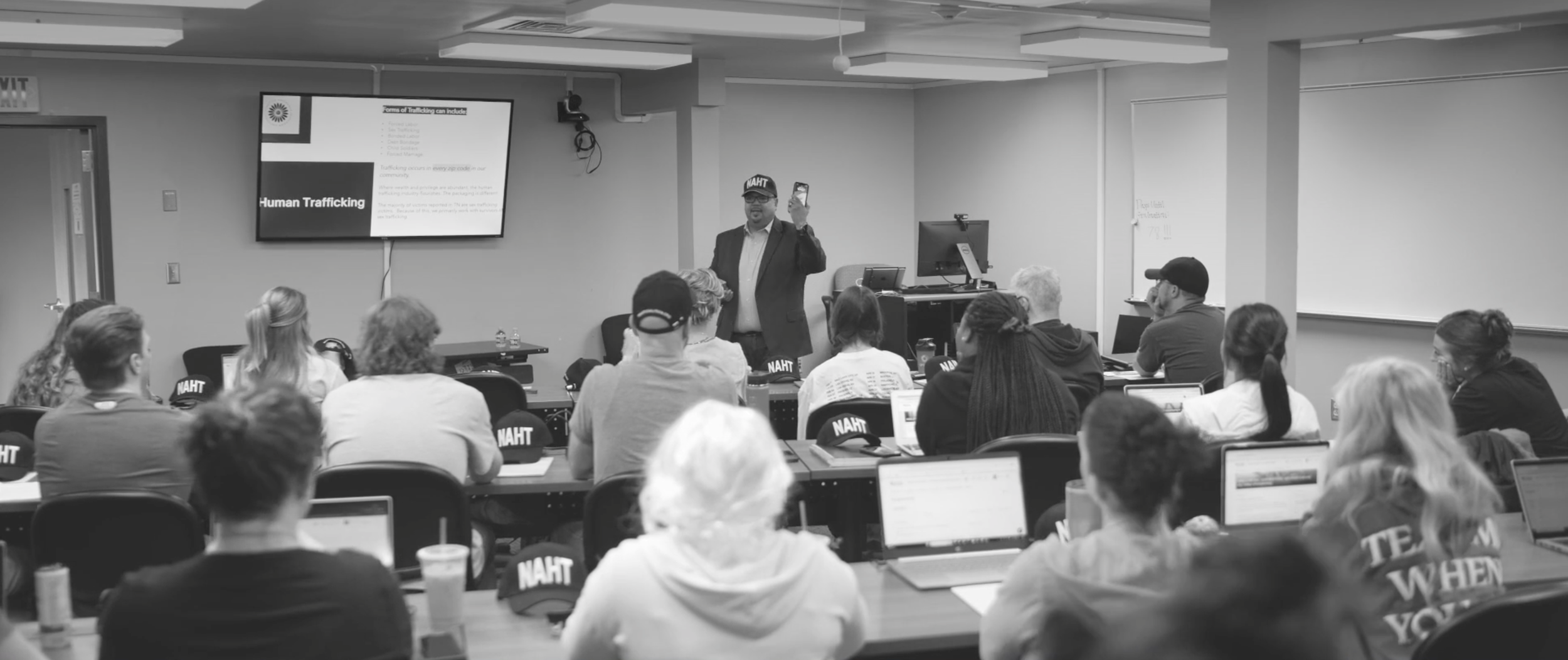
Educate to RECOGNIZE Educate to Recognize is NAHT's prevention arm — the work that happens before Rescue and Restore are ever needed. While those teams meet women and children already caught in trafficking and addiction, Educate to Recognize goes upstream: into classrooms, churches, and communities, teaching people to spot the warning signs early enough to protect someone.
Trafficking rarely announces itself. It looks like grooming — slow, personal, and usually carried out by someone a child already knows and trusts. Because the danger hides in plain sight, the people already around that child are the ones best positioned to catch it, and they're who this program prepares.
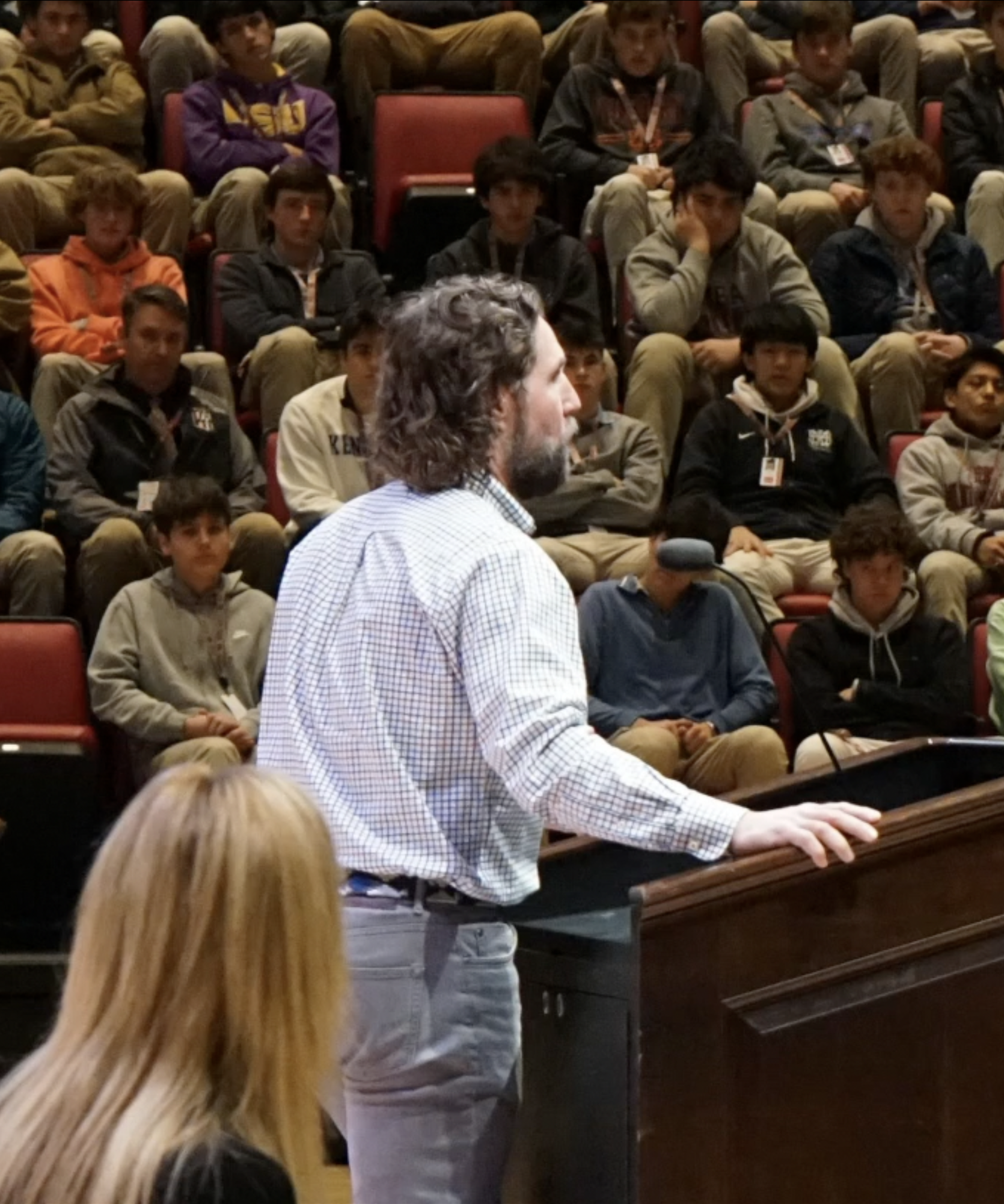
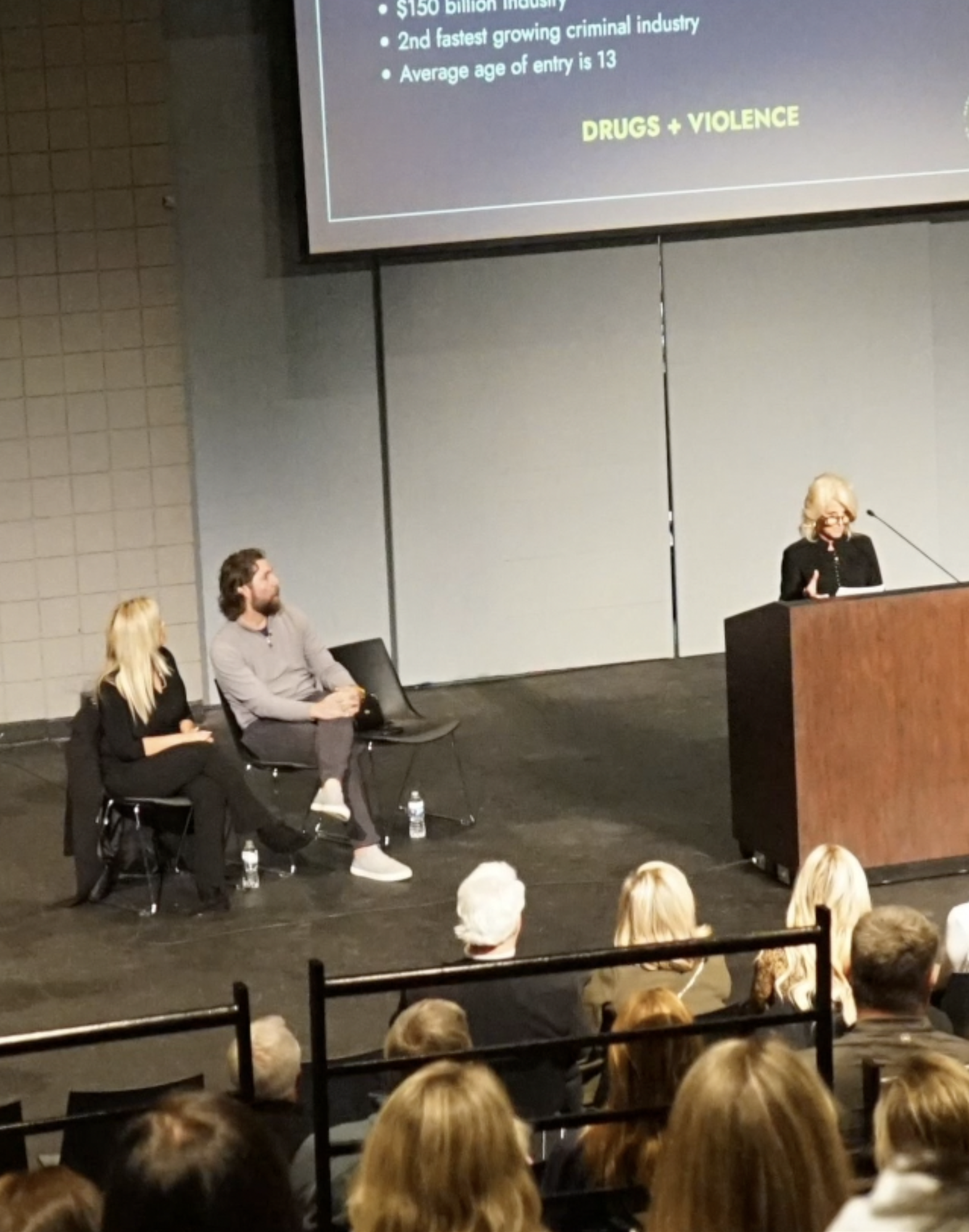
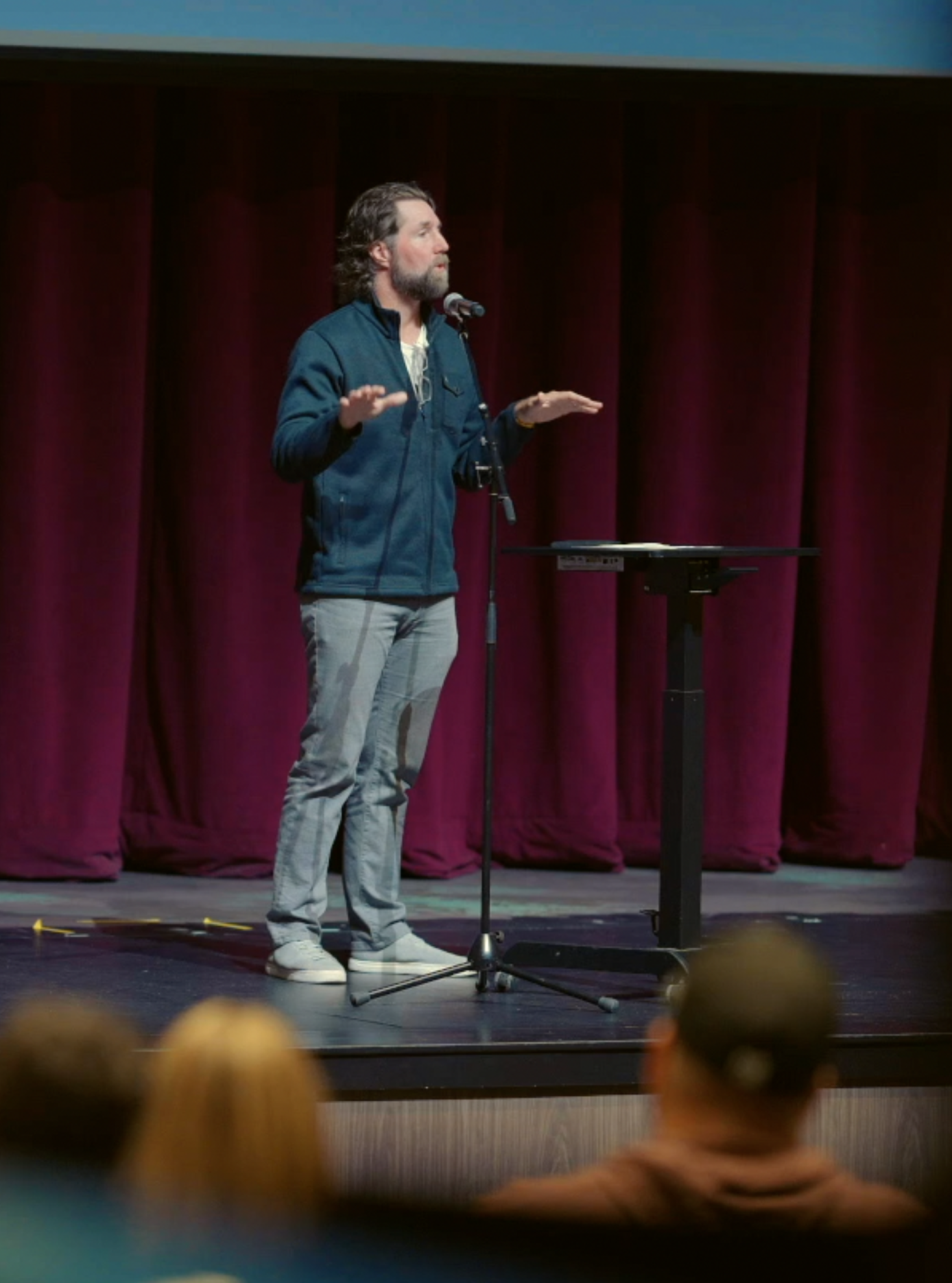
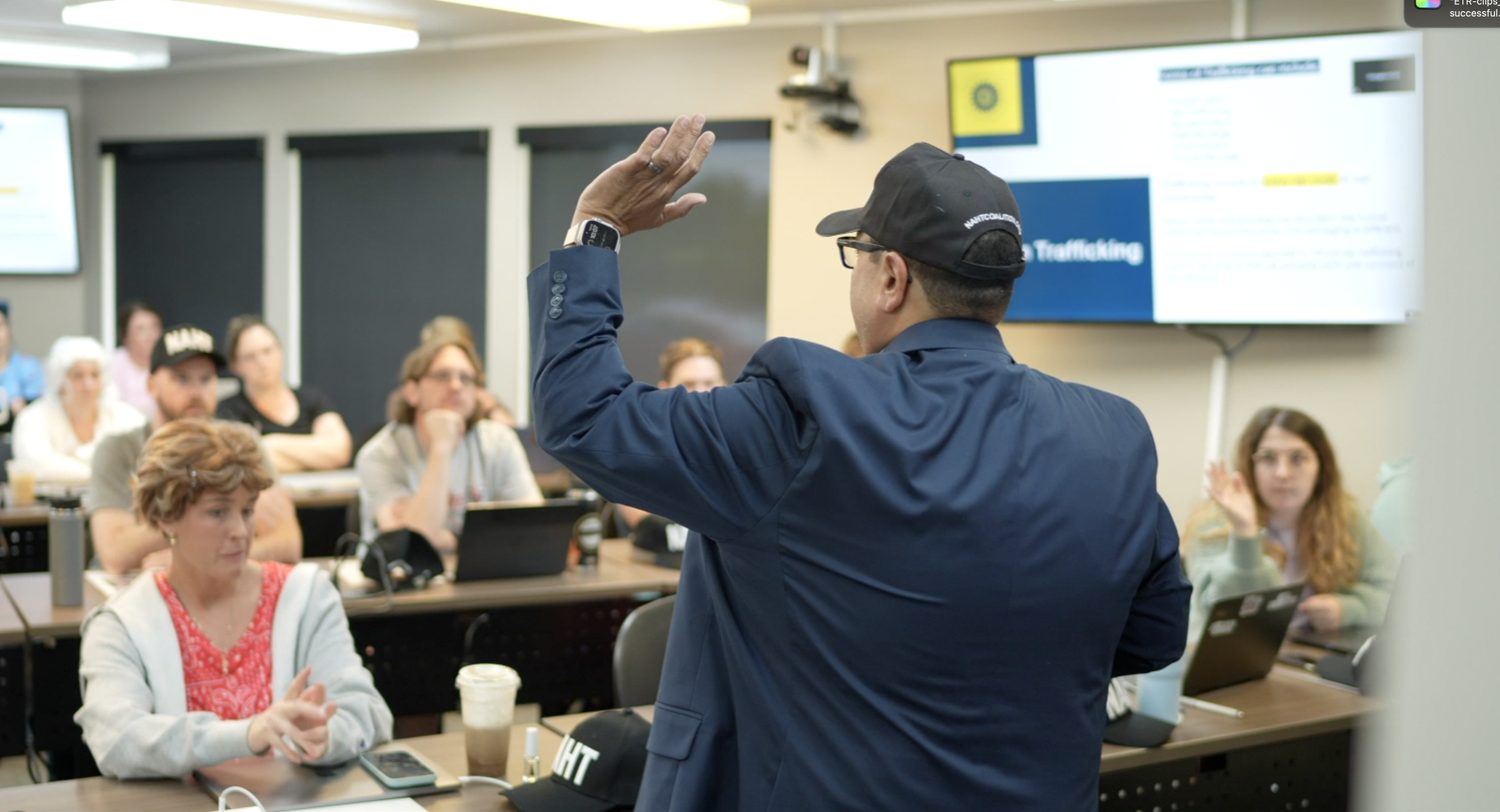
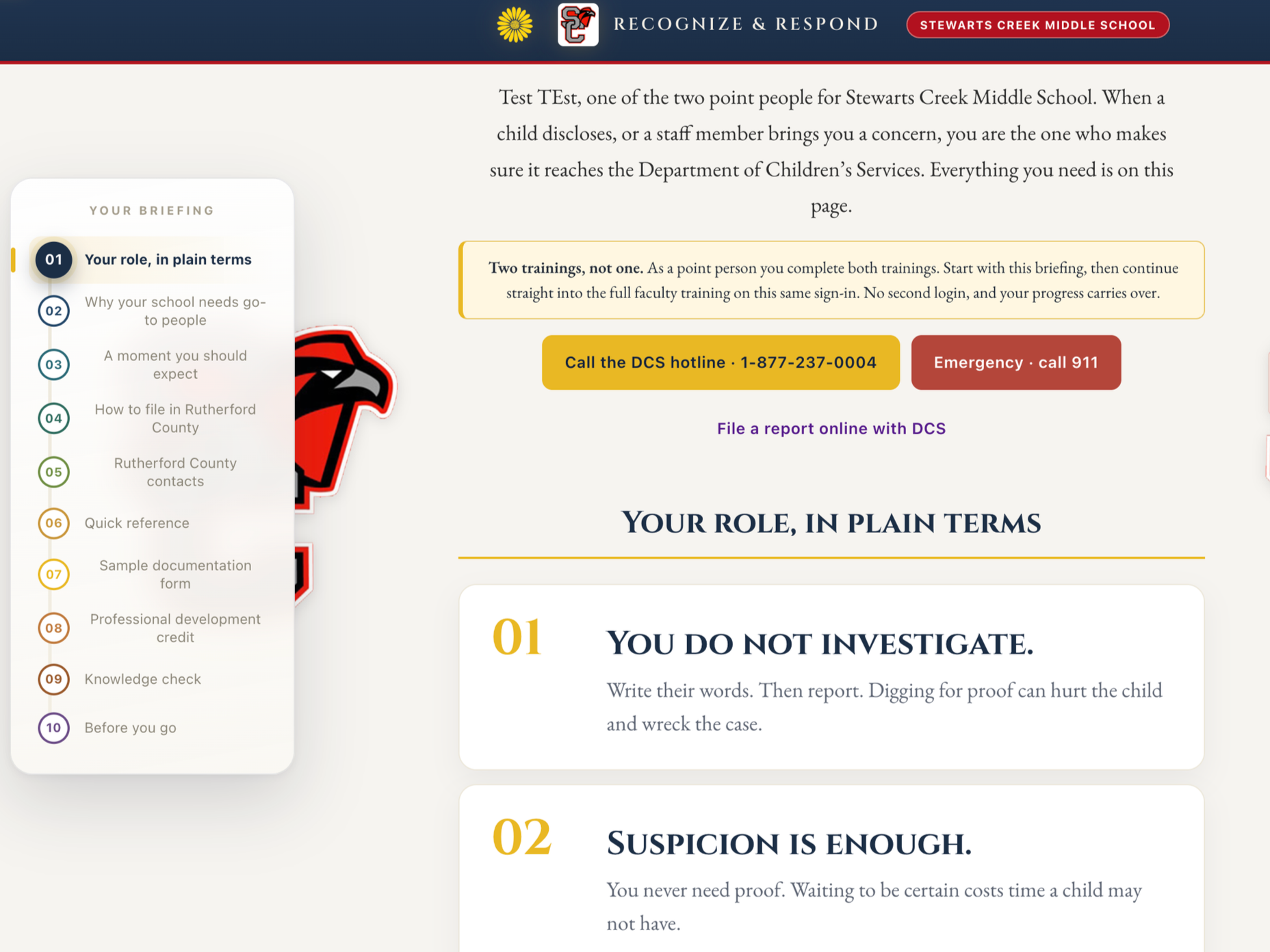
Every site follows the same sequence — faculty first, then parents, then students last — with two trained point people at each school as a trusted place for disclosure to land. Content is shaped for each audience rather than one-size-fits-all, and every session carries a Thriver's voice — a survivor now on staff, turning statistics into testimony. It's rooted in the belief that every person carries the image of God, and that this is long-haul work, not a campaign.
Educate Tennessee
Tennessee has taken an important step forward in protecting students. State law now requires K–12 public schools to provide age- and grade-appropriate education on child trafficking prevention and awareness. Educate to Recognize helps schools go beyond awareness alone by equipping educators, engaging parents and guardians, and preparing students to recognize grooming, exploitation, and unsafe situations.
Through Educate Tennessee, NAHT is helping bring this prevention model into school communities across the state. Rutherford County is leading the way with a countywide implementation reaching 52 public schools and more than 57,000 students, creating a model that can help inform what prevention looks like across Tennessee.
Frequently asked questions
-
• Traffickers target people who are marginalized or in difficult circumstances.
• Victims may be forced or tricked into an exploitative situation which constitutes trafficking after the trafficker uses violence, deception or blackmail.
• Criminals trafficking children target victims from extremely poor households, dysfunctional families or those who are abandoned and have no parental care.
• Traffickers do not pick at random. They look for vulnerabilities and then meet the need nobody else was meeting. Nationally, the trafficker usually turns out to be somebody the person already knew, most often an employer or a family member.
-
• While there isn’t a clear-cut answer, we DO know, as we mentioned earlier, that human trafficking is a SUPPLY and DEMAND business.
• Reported tips in Tennessee rose from 722 in 2019 to 1,432 in 2023. Some of that is more trafficking, and a good deal of it is more people knowing what they are looking at and who to call. TBI counts these as calls and tips. They are not confirmed cases, and saying so out loud builds credibility instead of costing it.
-
• Unfortunately, many trafficked victims do not testify against their trafficker.
• Trauma bond.
• TBI made 113 trafficking-related arrests in 2024 and recovered 57 victims across 31 operations. Arrests are not convictions, and the gap between the two is the honest answer to this question.
• Tennessee has also removed the statute of limitations for trafficking a child for a commercial sex act, so a survivor can come forward years later.
-
• Traffickers have integrated technology into their business model at every stage of the process, from recruiting to exploiting victims.
• Two types of strategies. “Hunting” involves a trafficker actively pursuing a victim, typically on social media.
• “Fishing” is when perpetrators post job advertisements and wait for potential victims to respond.
• TBI counted 385,924 commercial sex ads from 82,329 profiles posted in Tennessee in 2024. TBI is careful to say not all of those involve trafficking, and some are duplicates or bot-generated. Repeat that caveat when you use the number.
-
• Tennessee does not require physicians or nurses to complete human trafficking training for licensure. Some individual hospital systems train their staff. There is no statewide mandate and no public count of who does.
• What Tennessee does require: two hours of trafficking training for law enforcement officers assigned to field or investigative duties, and human trafficking training through the POST Commission for police certification.
• TBI’s own numbers make the gap plain. Out of roughly 1,170 tips in 2024, health care generated 53. In 2023 it generated 8.
• That is the opening. Emergency departments, urgent care, clinics, and dental offices are places a trafficking victim ends up, and almost none of those visits turn into a call. The people at those front desks are on the front lines whether anybody told them so or not. NAHT builds trainings for exactly this.
-
• Buyers are overwhelmingly men. TBI runs undercover operations aimed squarely at people trying to buy sex, including people trying to buy sex with a minor, and the arrests bear that out.
• Many buyers use the same words victims use to describe what drives them. Shame. Scared. Lonely. Trapped.
• For boys, pornography is the dress rehearsal before they transition from images to purchasing, thus continuing the cycle. We should address the demand side of the equation with wisdom and compassion, and acknowledge that a man’s journey to buying sex is just as broken as a woman’s journey to being sold.
• In so doing, we can hold men accountable in an empowering way to stop a commercial sex trade industry that is exploiting the most vulnerable people in our city.