Educate Tennessee

Educate to Recognize (ETR)
is the prevention and awareness initiative of the National Anti-Human Trafficking Coalition. ETR equips educators, families, and students with practical, age-appropriate information to recognize grooming and exploitation, strengthen protective relationships, and respond appropriately when concerns arise.
Rutherford County is implementing this approach across its public-school community, creating a model that can inform future implementation throughout Tennessee.
Beginning July 1, 2026, Tennessee law requires public schools and public charter schools to provide age- and grade-appropriate child trafficking prevention and awareness education for students in grades K–12 as part of health education.

What does effective prevention look like ?
We go beyond student awareness alone by equipping the adults around students, engaging families, establishing clear response pathways, incorporating a survivor-informed perspective, and supporting continued implementation.
The mandate creates a requirement. Our goal is to help schools build a community around it.
Students should not carry the responsibility for recognizing exploitation alone.
Different audiences. One coordinated prevention framework.
-
Recognize warning signs, understand role boundaries, support disclosure, and follow existing reporting procedures.
-
Understand grooming, digital risks, healthy boundaries, and how to create an environment where children feel safe asking for help.
-
Recognize manipulation, unsafe secrecy, boundary violations, online risks, and the trusted adults they can turn to.
designed to work within the existing school systems
1. School Points of Contact
Designated personnel help coordinate implementation, communication, and school-led support.
2. Faculty & Staff Education
School personnel learn to recognize grooming behaviors, concerning patterns, support disclosure, and understand their role.
3. Parent & Guardian Education
Families receive practical guidance on grooming, online exploitation, digital safety, boundaries, communication, and disclosure response.
4. Student Education
Developmentally appropriate, non-graphic content helps students recognize manipulation, understand boundaries, identify trusted adults, and seek help.
5. Thriver-Informed Presentations
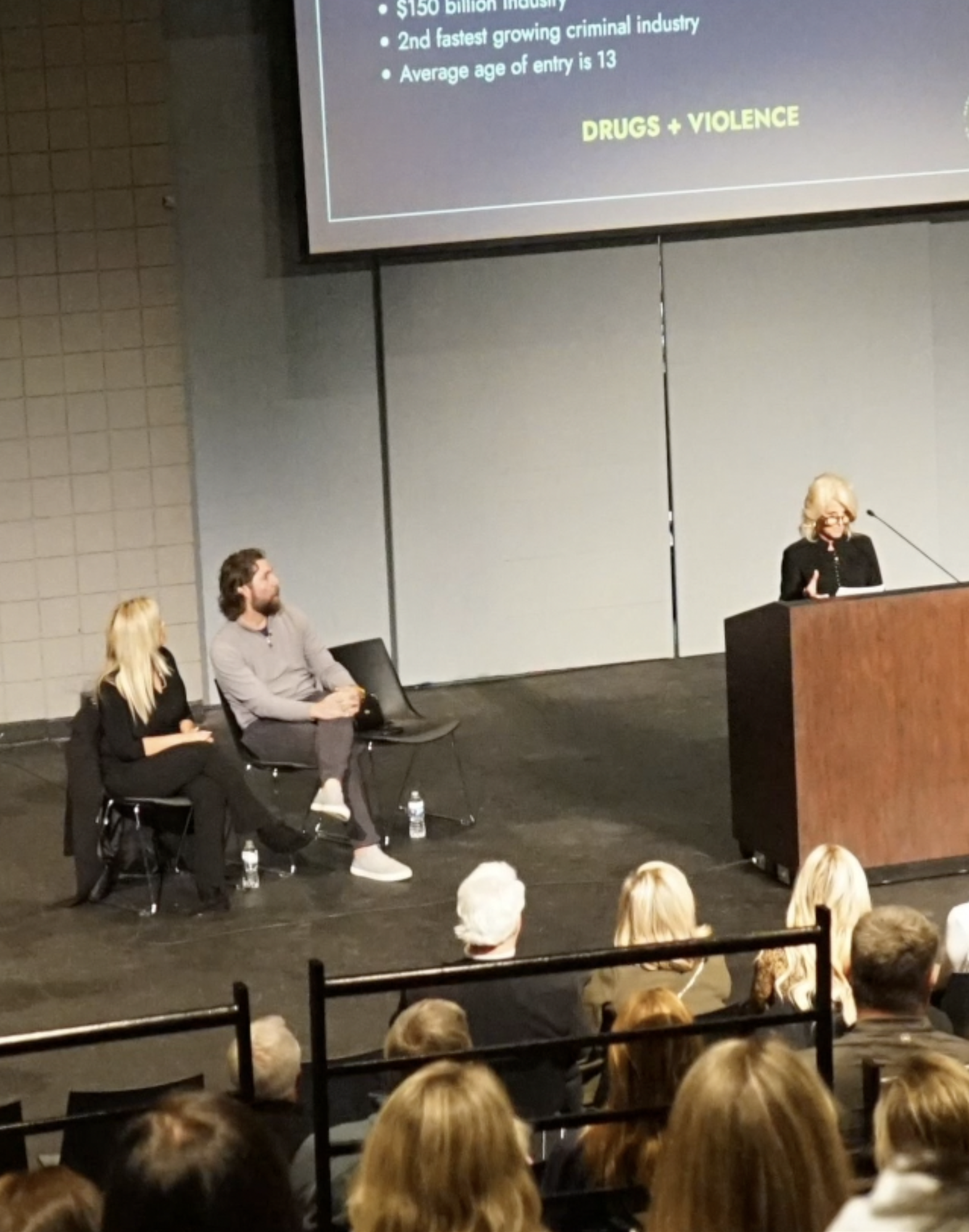
NAHT Thrivers bring lived experience into the education responsibly, helping audiences understand how grooming and exploitation can develop in real life.
6. Follow-Up
Digital learning, resources, completion records, school coordination, and structured follow-up reinforce learning beyond a single presentation.
What Participating Schools
Receive

Multi-Audience Approach
Content for faculty, parents and guardians, and students.
Age- & Grade-Appropriate Content
Education adapted to developmental level.
School & District Completion Tracking
Visibility into participation and module completion.
Completion Documentation
Records confirming completion of designated ETR modules.
Professional Learning Alignment
ETR can be coordinated with existing district professional-learning goals. Any formal credit is determined by the participating school system.
Structured Follow-Up
Continued resources and communication to reinforce implementation.

Survivor-Informed by Design
NAHT Thrivers—survivors of human trafficking who are now part of our work—help shape and participate in Educate to Recognize (ETR) education.
Their experiences provide context around trust, manipulation, secrecy, disclosure, and restoration.
Stories are shared intentionally, without graphic detail and without sensationalizing trafficking.
The purpose is understanding, recognition, and hope.
RACE TO PROTECT
Rutherford County
What we learn here can help strengthen a repeatable model for communities throughout Tennessee.
52 public schools
57,000+ students
10,000 faculty and staff
Race to Protect is the community engagement initiative supporting Rutherford County's implementation of Educate to Recognize.
It gives businesses, churches, families, schools, and other community partners a way to support and participate in prevention.
Frequently asked questions
-
ETR is NAHT's prevention and awareness initiative for educators, families, students, and communities. It addresses grooming, exploitation, digital risks, healthy boundaries, trusted adults, and appropriate response.
-
No. ETR combines education for faculty, parents and guardians, and students with digital resources, in-person presentations for select schools, school coordination, and follow-up.
-
Yes. Content is adapted by developmental level. Younger students receive foundational safety concepts, while older students can address grooming, online exploitation, sextortion, manipulation, and relationships in greater depth.
-
No. ETR is designed to communicate serious information without unnecessary graphic detail.
-
Yes. School leaders and community partners can contact NAHT to discuss implementation.
-
No. ETR provides awareness education. Faculty are not trained or expected to investigate, diagnose, or determine whether trafficking has occurred.
-
No. ETR reinforces awareness and role clarity but does not replace district requirements or Tennessee law.
-
The student's safety and emotional support are prioritized. Adults listen without conducting their own investigation and follow district procedures and applicable Tennessee reporting requirements.
-
No. Investigation belongs to the appropriate authorities. NAHT's role is prevention, awareness, education, resources, and support.
-
A Thriver is a survivor of human trafficking who has moved through restoration and now uses her lived experience to help others. Thrivers help shape and, when appropriate, participate in ETR education.
-
No. Rutherford County is an important large-scale implementation of a model designed for broader use.
-
Yes. NAHT is Christ-centered and transparent about that identity. Public-school ETR programming focuses on prevention, awareness, safety, and support rather than religious instruction.
-
ETR's digital model supports participation and completion records at the school and district level.
-
Yes. ETR covers the topics required by Tennessee’s new K–12 child trafficking prevention and awareness law through age- and grade-appropriate education. ETR also goes beyond the requirement by equipping faculty and engaging parents and guardians.
Have Questions?
Every school system is different. Our team can help you understand how ETR works, what it includes, and how it can fit within your district’s existing policies, schedules, and prevention efforts.
Whether you’re a superintendent, board member, administrator, educator, or community leader, we welcome the conversation.